
Your thoughts on AI and climate change: findings from our recent survey

A really big thank you to everyone who took part in our online survey earlier this year. In this mini survey, we asked you about two big issues that are on many people’s minds — climate change and artificial intelligence (AI). Here’s a brief snapshot of what you told us.
Artificial intelligence
AI is now part of everyday life for many Next Steps study members. Nearly half (47%) said they use AI frequently — at least several times a week. Only a minority reported rarely (17%) or never (15%) using it.
Male study members are just a little more likely than female study members to be frequent users of AI (49% compared to 45%). There’s a bigger difference in use of AI between graduates and non-graduates. Around three in five study members with a degree are using AI several times a week or more compared to just under two in five of those without a degree.
Is AI good or bad?
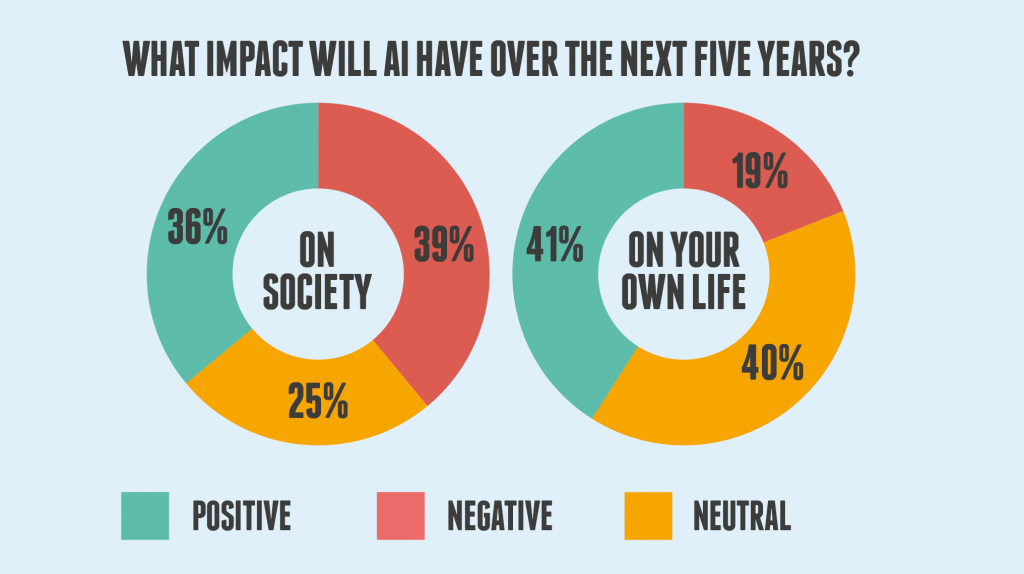
Study members were split on whether AI will have a positive or negative impact on society over the next five years.
Females were less likely than males to expect a positive impact (33% compared to 39%). Study members were generally more optimistic when thinking about the effects of AI on their own lives in future. Twice as many predicted a positive impact as a negative impact.
In work, around seven in 10 study members who reported using AI tools said it had improved their productivity. But looking ahead, half of all study members said they expect AI to reduce jobs in their field over the next five years.
Description of image.
Two pie charts showing study members’ views on the impact of AI on society and on their own lives over the next five years. On society, 36% think it will have a positive impact, 39% a negative impact, and 25% a neutral impact. On their own lives, 41% think it will have a positive impact, 19% a negative impact, and 40% a neutral impact.
Climate change
Almost all study members agree climate change is happening, and the vast majority (four in five) believe humankind is at least partly responsible. Most study members (88%) said they are worried about the impact of climate change on future generations.
Taking action
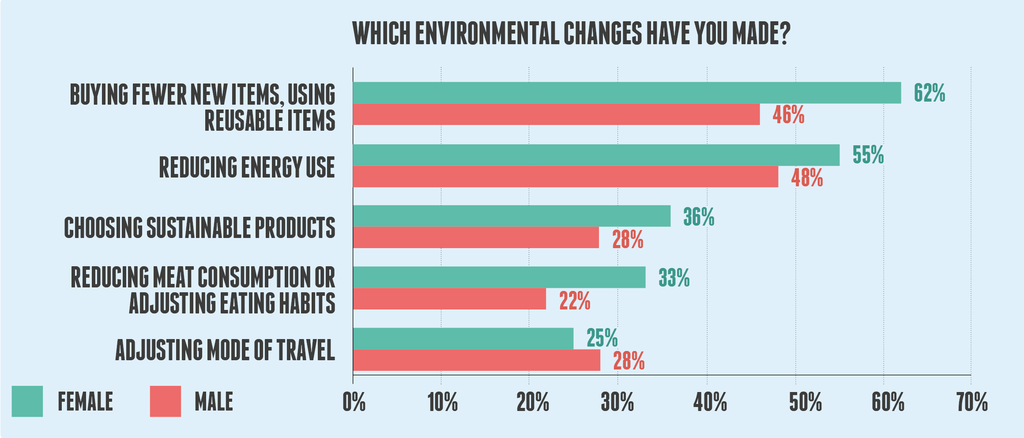
Four out of five study members said they have made at least one lifestyle change because they care about the environment. Female study members were more likely than male study members to have made the lifestyle changes we asked about. This included using reusable items to reduce waste (62% compared to 46%) and changing eating habits (33% compared to 22%). However, it was a little less common for female study members to have switched their mode of transport than it was for male study members (25% compared to 28%).
Supporting policy changes
You also shared your thoughts on the different steps the government could take to address climate change. There was most support for working with other countries to reduce greenhouse gas emissions, with 70% saying we should do this. Around two thirds (68%) agreed with building more wind farms on land and a similar proportion (64%) said there should be stricter legal limits on emissions from industry.
Just over one in four (27%) were in favour of increasing tax on flights, and around one in five supported banning the sale of petrol and diesel cars (22%) and raising tax on petrol (19%).